Queue Management System in Saudi Arabia: Fixing Drive-Thru Wait in 2026
Idle cars stacked three deep behind a drive-thru window are not just a customer-experience problem. They are also a small but measurable emissions problem. As Saudi Arabia’s quick-service restaurant and retail sector grows through 2026, more operators are pairing a queue management system in saudi arabia with smarter lane design to cut both wait time and wasted fuel. This article looks at why the two problems are connected, and what a modern rollout actually looks like.
Why Drive-Thru Queues Are an Emissions Problem, Not Just a Speed Problem
A car sitting in drive-thru traffic with the engine running burns fuel and produces exhaust for no output. Multiply that by dozens of vehicles per hour, across hundreds of locations, and the wasted idling adds up over a year. The U.S. Environmental Protection Agency has published idling-reduction guidance precisely because this pattern repeats everywhere drive-thru lanes exist, not only in the United States.
Saudi Arabia’s own Vision 2030 program includes sustainability and quality-of-life targets that make operational efficiency, including less idling at service points, a relevant metric for larger retail and QSR groups in 2026, not an afterthought.
How Drive-Thru Systems in Saudi Arabia Are Evolving in 2026
Modern Drive-thru Systems in Saudi Arabia now combine order-point displays, kitchen-timing software, and ticket or plate recognition so a car’s order is already being prepared before it reaches the window. That alone shortens the time an engine runs per visit.
Layer a queue management platform on top, and the lane itself becomes smarter. Instead of one single line, vehicles can be routed to whichever prep station is fastest, and staff dashboards flag when a lane is backing up before it reaches the street.
What Should a 2026 Drive-Thru Queue Rollout Include?
- Dual or triple order points feeding one kitchen, balanced by a queue controller.
- Digital menu boards that adjust pricing or promotions based on time-of-day demand.
- Lane analytics tracking average time from order to window, by shift and by day.
- Mobile pre-order integration so app customers skip the ordering step entirely.
Does Queue Technology Really Reduce Idling Time?
Yes, measurably. Operators who move from a single first-come lane to a managed multi-point system commonly report double-digit percentage cuts in average time-in-lane. Less time in lane means less idling per vehicle, which compounds across thousands of visits a month at a busy location.
The table below summarizes typical results reported by operators after a queue and drive-thru technology upgrade.
| Metric | Before Upgrade | After Upgrade |
|---|---|---|
| Average time in lane | 6-8 minutes | 3.5-5 minutes |
| Cars abandoning the line | 8-12% | 2-4% |
| Peak-hour throughput | 60-70 cars/hour | 90-110 cars/hour |
Planning Your Own Rollout
Most multi-branch operators start with a single pilot site, run it through one full peak season, and only then standardize the hardware list across locations. A sensible order of operations:
- Audit current time-in-lane and abandonment data for 30 days before changing anything.
- Pilot queue software and order-point hardware at one branch.
- Compare before and after lane times and fuel-idling estimates.
- Roll out to the rest of the network with the adjusted staffing model.
Getting the public-facing side right matters too. If customers cannot find accurate hours, menu, or location information online before they even arrive, no amount of lane engineering helps. That is a separate but related project, and it is often worth having reliable local experts handle the digital presence side while operations teams focus on the physical lane redesign.
Measuring the Real Fuel and Emissions Impact
Operators rarely have a direct fuel-burn sensor on every customer vehicle, so most track a proxy metric instead: total engine-running minutes across the lane per day, estimated from time-in-lane data the queue system already collects. A branch that cuts average time-in-lane from seven minutes to four minutes, across 400 daily transactions, removes roughly 1,200 minutes of collective idling per day at that single location. Multiply that across a regional chain with dozens of branches, and the cumulative reduction becomes a figure worth reporting in a company’s own sustainability notes, not just an operations memo.
This is also why queue data and emissions reporting increasingly sit in the same conversation. A branch manager who can show a measurable drop in average lane time has evidence for two audiences at once: a regional operations director focused on throughput, and a sustainability team tracking the chain’s environmental footprint for 2026 reporting.
What Slows Down a Drive-Thru Even After a Queue Upgrade?
Installing software is not the finish line. A few recurring bottlenecks still catch operators off guard after go-live:
- Kitchen prep time, not lane software — if food preparation is the real bottleneck, a faster order point just moves the wait from the lane to the window.
- Peak-hour staffing gaps — a queue system that reveals a 6-7pm surge is only useful if the schedule actually adds a second window operator during that window.
- Menu complexity — a sprawling menu increases average order time regardless of how efficient the lane routing is.
- Payment friction — card or app payment failures at the window erase minutes that the upstream queue system saved.
Operators who review all four alongside the queue software, rather than treating the software as a standalone fix, see the largest overall gains in 2026 rollouts.
Frequently Asked Questions
What is a queue management system in Saudi Arabia used for in a drive-thru context?
It manages how vehicles are routed, tracked, and served across multiple order and pickup points, reducing the single-file bottleneck that causes long idling lines.
Do drive-thru upgrades actually lower fuel use?
Indirectly, yes. Shorter time-in-lane means less idling per vehicle, and operators tracking fuel-adjacent metrics like abandonment rate typically see improvement within the first month.
Is this technology only for restaurants?
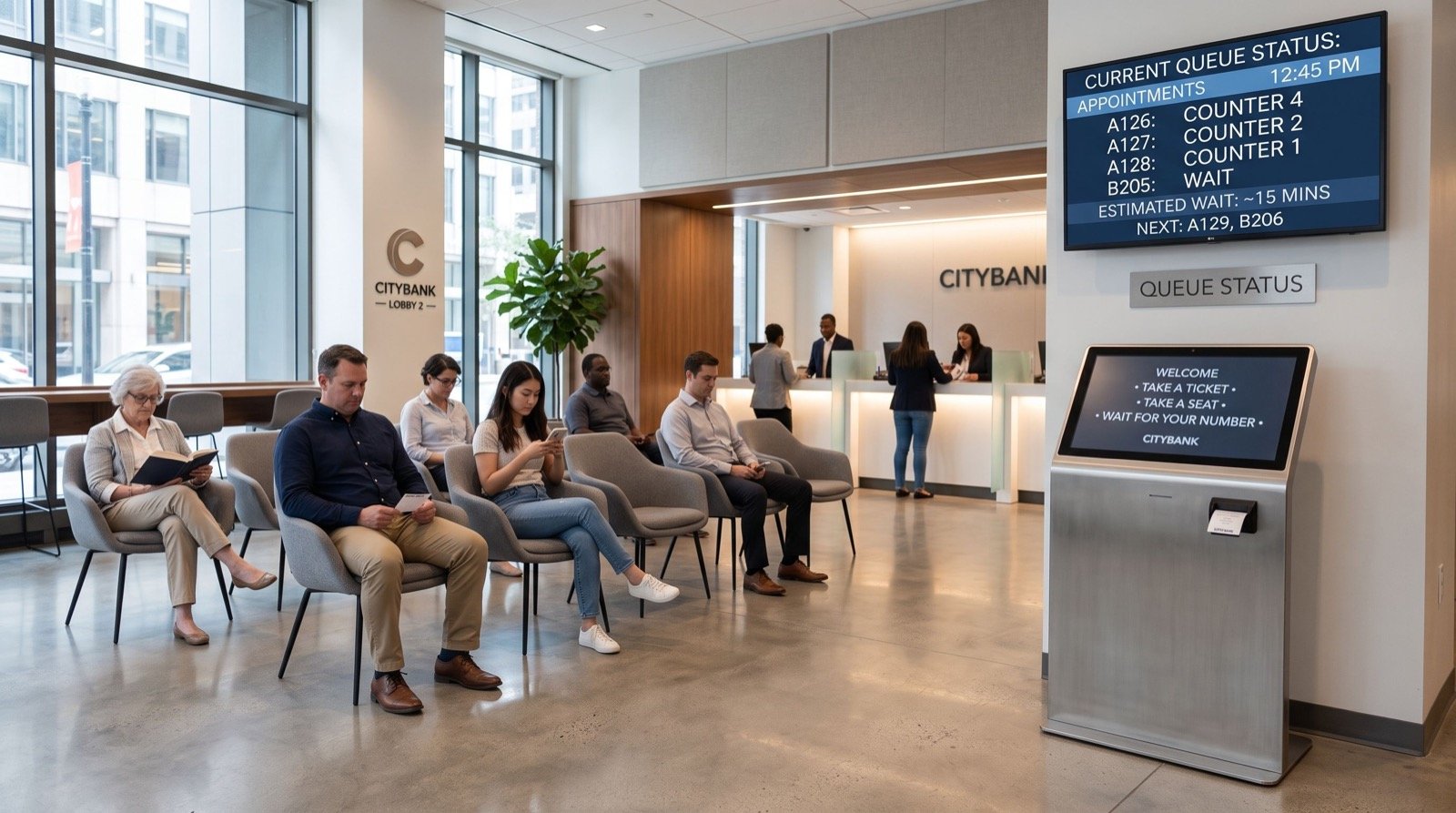
No. Pharmacies, banks with drive-up windows, and vehicle inspection centers in Saudi Arabia use the same core queue and lane-management approach.
How much does a drive-thru queue upgrade typically cost?
Costs vary widely by number of lanes and whether kitchen display integration is included, but most single-site pilots are budgeted as a mid-size equipment project rather than a full store rebuild.
Choosing a Vendor for a 2026 Drive-Thru Queue Project
Not all queue vendors understand drive-thru lane dynamics as well as they understand indoor lobby ticketing. Before signing a contract, it is worth asking a vendor three direct questions: have they deployed lane-routing hardware outdoors in similar heat and dust conditions, can their dashboard export raw time-in-lane data rather than only summary charts, and do they offer phone or on-site support during the specific hours your drive-thru runs busiest. A vendor that only operates a help desk during standard business hours is a poor fit for a location that does its highest volume after 8pm.
Conclusion
Shorter drive-thru lines in 2026 are good for customers, good for throughput, and good for the small but real emissions footprint of idling vehicles. If your locations are still running a single-file lane with a hand-written order ticket, a queue management upgrade paired with modern drive-thru hardware is one of the more measurable operational investments available this year. Pilot it at one site, track the numbers, and expand with confidence.